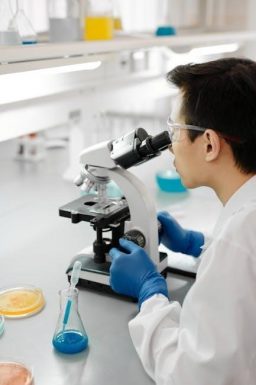
This comprehensive study guide explores life’s intricacies, from molecular foundations to ecological impacts, aiding in thorough preparation for your Biology EOC!
What is Biology?
Biology, fundamentally, is the scientific study dedicated to life and living organisms. This expansive field delves into the origins, evolutionary history, structure, function, growth, distribution, and taxonomy of all life forms. It’s not merely memorizing facts, but understanding the intricate interactions within organisms and between organisms and their environments.
Biological science encompasses a vast range of disciplines, all interconnected. From the microscopic world of molecules to the global scale of ecosystems, biology seeks to unravel the complexities of life. Understanding biological principles is crucial for addressing pressing global challenges, including healthcare, food security, and environmental conservation. It’s a dynamic and ever-evolving science!
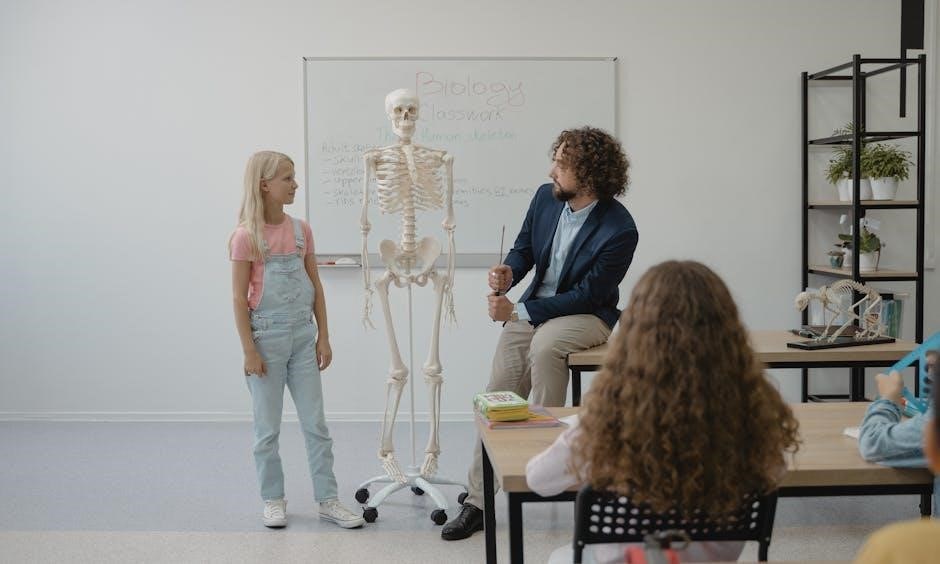
Branches of Biology
Biology isn’t a single, monolithic field; it’s comprised of numerous specialized branches. Zoology focuses on the study of animals, while botany explores the plant kingdom. Microbiology investigates microscopic organisms like bacteria and viruses, crucial for understanding disease and immunity.
Genetics examines heredity and variation, while ecology studies the interactions between organisms and their environment. Physiology explores the functions of living organisms, and anatomy focuses on their structure. Furthermore, biochemistry investigates the chemical processes within living things. These branches often overlap, demonstrating the interconnectedness of life. Each provides a unique lens through which to view the biological world, contributing to a holistic understanding.
The Characteristics of Life
Living organisms share several key characteristics that distinguish them from non-living matter. All living things grow and develop, increasing in size and complexity. They also reproduce, creating new organisms, ensuring the continuation of their species. Responsiveness to stimuli – changes in the environment – is crucial for survival.
Furthermore, life requires energy to fuel its processes, obtained through various means like photosynthesis or consumption. Homeostasis, maintaining a stable internal environment, is essential for optimal function. Organisms are also composed of cells, the basic units of life, and exhibit adaptation through evolution. Understanding these characteristics is fundamental to defining and recognizing life in all its diverse forms.
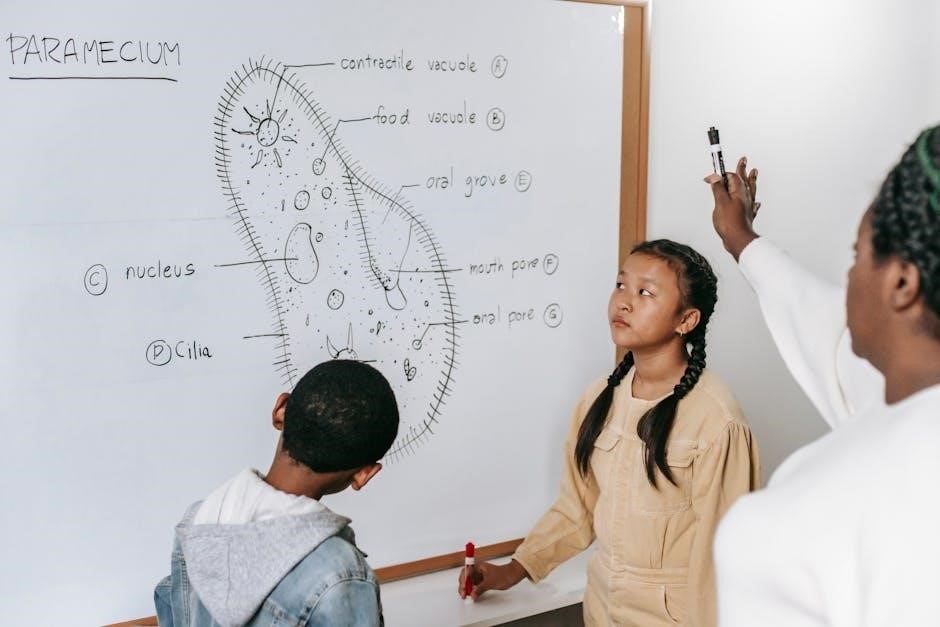
Biochemistry: The Molecular Basis of Life
Biochemistry delves into the molecules essential for life, exploring carbohydrates, lipids, proteins, and nucleic acids – the building blocks of all living systems!
Macromolecules: Carbohydrates, Lipids, Proteins, and Nucleic Acids
Macromolecules are the large organic polymers crucial for life, formed by smaller repeating monomers. Carbohydrates, like sugars and starches, provide energy and structural support. Lipids, including fats, oils, and waxes, store energy, form cell membranes, and act as hormones.
Proteins, composed of amino acids, perform a vast array of functions – enzymes catalyzing reactions, structural components, and immune system defenders. Nucleic acids, DNA and RNA, store and transmit genetic information. Understanding their structures and functions is paramount.
Key concepts include polymerization, dehydration synthesis, and hydrolysis. Recognizing the monomers and their roles within each macromolecule is essential for grasping biological processes. These molecules interact to create the complexity of life!
Enzymes and Biochemical Reactions
Enzymes are biological catalysts, primarily proteins, that accelerate biochemical reactions within cells. They lower the activation energy required for reactions to occur, without being consumed in the process. Enzyme function is highly specific, dictated by their three-dimensional structure and active site.
Factors like temperature, pH, and substrate concentration influence enzyme activity. Biochemical reactions can be anabolic (building up) or catabolic (breaking down). Understanding these processes is vital for comprehending metabolism.
Key concepts include enzyme-substrate complex formation, induced fit model, and factors affecting enzyme efficiency. Inhibition, both competitive and non-competitive, regulates enzyme activity. These reactions underpin all life functions!
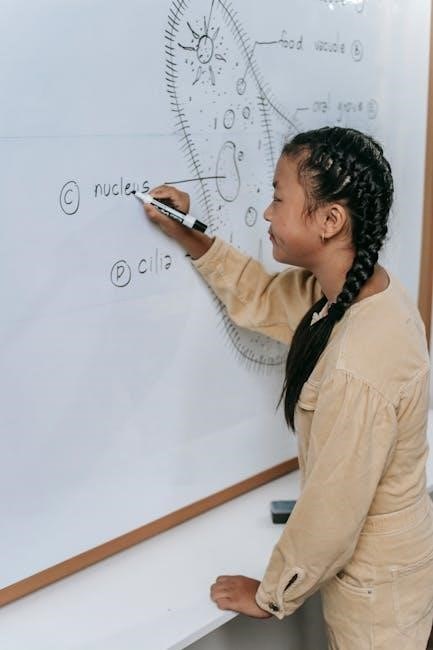
Cell Structure and Function
Cells, the basic units of life, exhibit diverse structures and functions. Understanding these components – organelles and their roles – is crucial for biological comprehension.
Prokaryotic vs. Eukaryotic Cells
Cells fall into two primary categories: prokaryotic and eukaryotic, distinguished by their structural complexity. Prokaryotic cells, like bacteria and archaea, lack a nucleus and other membrane-bound organelles. Their DNA resides in a nucleoid region, and they are generally smaller and simpler than eukaryotic cells.
Eukaryotic cells, found in plants, animals, fungi, and protists, possess a true nucleus housing their genetic material. They also contain various organelles – mitochondria, endoplasmic reticulum, Golgi apparatus – each performing specialized functions. This compartmentalization allows for greater efficiency and complexity.
Key differences include size, internal organization, and the presence of a nucleus. Prokaryotes reproduce asexually through binary fission, while eukaryotes can reproduce both sexually and asexually. Understanding these fundamental distinctions is vital for grasping the diversity of life.
Cell Organelles and Their Functions
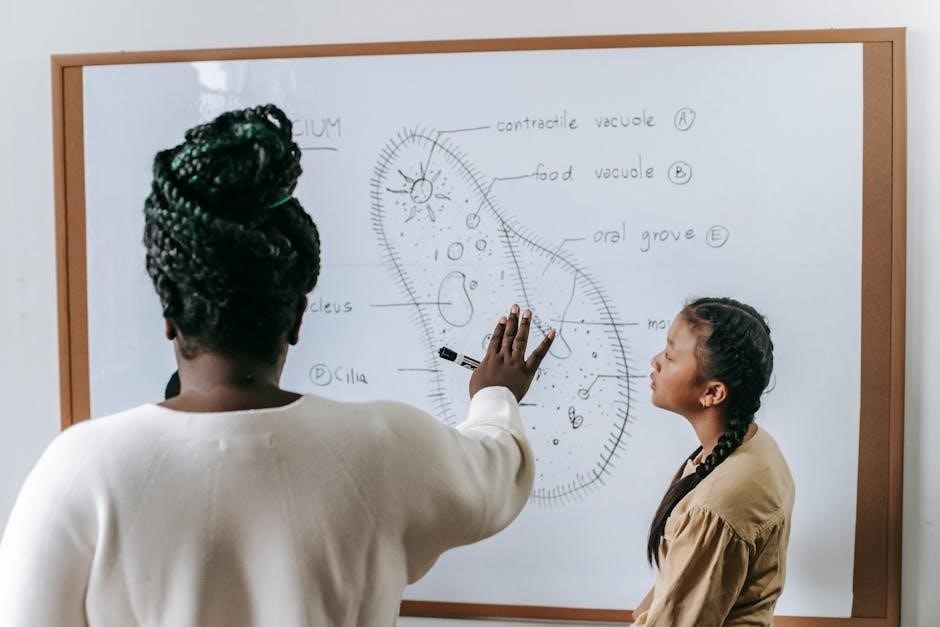
Eukaryotic cells are characterized by membrane-bound organelles, each with a specific role. The nucleus controls cellular activities, housing DNA. Mitochondria are the “powerhouses,” generating ATP through cellular respiration. The endoplasmic reticulum (ER) synthesizes and transports proteins and lipids – rough ER with ribosomes, smooth ER without.
The Golgi apparatus processes and packages proteins. Lysosomes contain enzymes for breaking down waste materials. Ribosomes are responsible for protein synthesis. Vacuoles store water, nutrients, and waste. In plant cells, chloroplasts conduct photosynthesis, converting light energy into chemical energy.
Understanding the function of each organelle is crucial for comprehending cellular processes. These organelles work in concert to maintain cell life, growth, and reproduction, demonstrating remarkable efficiency and coordination.
Cell Transport: Passive and Active Transport
Cellular transport governs the movement of substances across the cell membrane. Passive transport, requiring no energy, includes diffusion (movement from high to low concentration), osmosis (water diffusion), and facilitated diffusion (aided by proteins). These processes establish equilibrium.
Active transport, conversely, demands energy (ATP) to move substances against their concentration gradient. This often involves protein pumps. Endocytosis brings materials into the cell via vesicle formation, while exocytosis releases materials from the cell. Both are forms of active transport.
Understanding these mechanisms is vital for grasping nutrient uptake, waste removal, and overall cellular homeostasis. The selective permeability of the membrane ensures controlled internal environment maintenance.

Genetics and Heredity
Explore the fascinating world of genes, inheritance patterns, and DNA’s role in transmitting traits from parents to offspring – a core biology concept!
DNA Structure and Replication
Understanding DNA is fundamental to genetics. DNA, or deoxyribonucleic acid, possesses a distinctive double helix structure, resembling a twisted ladder. This structure comprises nucleotides – each containing a deoxyribose sugar, a phosphate group, and a nitrogenous base (adenine, thymine, guanine, or cytosine). Adenine always pairs with thymine, and guanine with cytosine, forming the ‘rungs’ of the ladder.
Replication ensures genetic continuity. Before cell division, DNA must replicate itself accurately. This process involves unwinding the double helix and using each strand as a template to build a new complementary strand. Enzymes like DNA polymerase play a crucial role in adding nucleotides and proofreading the new DNA, minimizing errors. This precise replication ensures that each daughter cell receives a complete and identical copy of the genetic information.
Gene Expression: Transcription and Translation
Gene expression is the process of turning genetic information into functional products. It occurs in two main stages: transcription and translation. Transcription, taking place in the nucleus, involves copying the DNA sequence of a gene into a messenger RNA (mRNA) molecule. This mRNA carries the genetic code from the DNA to the ribosomes.
Translation builds proteins. Translation, occurring in the ribosomes, uses the mRNA sequence to assemble a chain of amino acids, forming a protein. Transfer RNA (tRNA) molecules deliver the correct amino acids to the ribosome, guided by the mRNA codons. This process ultimately determines the traits and functions of an organism, showcasing the central dogma of molecular biology: DNA to RNA to protein.
Mendelian Genetics and Inheritance Patterns
Mendelian genetics, founded by Gregor Mendel, explains how traits are passed from parents to offspring. Key concepts include genes, alleles (different forms of a gene), dominant and recessive alleles, and genotypes (genetic makeup) versus phenotypes (observable traits). Punnett squares are vital tools for predicting inheritance patterns.
Inheritance patterns include autosomal dominant, autosomal recessive, and sex-linked traits. Understanding these patterns allows us to predict the probability of offspring inheriting specific traits. Monohybrid crosses examine inheritance of one trait, while dihybrid crosses analyze two. Deviations from Mendelian inheritance, like incomplete dominance and codominance, also exist, showcasing the complexity of genetic transmission.

Evolution and Classification
Explore the evidence supporting evolution, natural selection’s role in adaptation, and the hierarchical system used to classify the incredible diversity of life!
Evidence for Evolution
Understanding the compelling evidence supporting the theory of evolution is crucial for the Biology EOC. This includes examining the fossil record, which provides a historical sequence of life, demonstrating changes over time. Comparative anatomy reveals similarities in structures – homologous structures indicate common ancestry, while vestigial structures show remnants of features no longer in use.
Embryological development showcases striking resemblances during early stages across diverse species, hinting at shared evolutionary origins. Furthermore, molecular biology offers powerful evidence through DNA and protein sequence comparisons; the more similar the sequences, the closer the relationship. Biogeography, the study of species distribution, also supports evolution, explaining patterns based on continental drift and isolation. Finally, direct observation of evolutionary change in real-time, like antibiotic resistance in bacteria, provides contemporary proof.
Natural Selection and Adaptation
Natural selection, the driving force of evolution, hinges on variations within populations. Individuals with traits better suited to their environment – adaptations – are more likely to survive and reproduce, passing those advantageous traits to offspring. This process, over generations, leads to a shift in the genetic makeup of a population.
Key components include heritability (traits passed down), variation (differences among individuals), differential reproduction (varying reproductive success), and environmental pressures. Adaptations can be structural (physical features), physiological (internal functions), or behavioral (actions). Understanding concepts like fitness (reproductive success) and selective pressure (environmental factors) is vital. Artificial selection, where humans choose desired traits, demonstrates the power of selection, mirroring natural processes.
Taxonomy and the Classification of Living Organisms
Taxonomy is the science of classifying and naming organisms, providing a structured understanding of life’s diversity. The hierarchical classification system, developed by Linnaeus, organizes organisms into increasingly specific groups: Domain, Kingdom, Phylum, Class, Order, Family, Genus, and Species (DKPCOFGS).
This system reflects evolutionary relationships; organisms within the same group share a common ancestor. Domains (Bacteria, Archaea, Eukarya) represent fundamental differences in cell structure. Understanding binomial nomenclature – the two-part naming system (Genus species) – is crucial. Phylogenetic trees visually depict these evolutionary connections. Modern classification utilizes genetic data alongside physical characteristics, refining our understanding of life’s interconnectedness and providing a framework for studying biodiversity.
Ecology and the Environment
Ecology examines interactions within ecosystems, focusing on energy flow, nutrient cycles, and the profound impact humans have on our fragile environment.
Ecosystems and Biomes
Ecosystems represent communities of living organisms interacting with their physical environment, encompassing both biotic and abiotic factors. Understanding these interactions – predator-prey relationships, symbiotic connections, and competitive dynamics – is crucial. Biomes, on the other hand, are large geographic areas characterized by specific climate conditions, animal populations, and plant life.
Major biomes include forests (tropical rainforests, temperate deciduous forests, boreal forests), grasslands (savannas, prairies), deserts (hot and cold), tundra, and aquatic ecosystems (freshwater and marine). Each biome supports unique adaptations in its inhabitants. Studying these diverse systems reveals how organisms are shaped by their surroundings and how energy flows through trophic levels – from producers to consumers and decomposers. Recognizing the interconnectedness within and between ecosystems is vital for comprehending ecological balance.
Energy Flow and Nutrient Cycles
Energy flow through ecosystems is fundamentally unidirectional, beginning with solar energy captured by producers (plants) during photosynthesis. This energy is then transferred to consumers via food chains and food webs, with significant energy loss at each trophic level – typically around 90%. Understanding this energy pyramid is essential.
Nutrient cycles, however, are cyclical processes. Key cycles include the water cycle, carbon cycle, nitrogen cycle, and phosphorus cycle. These cycles involve the movement of essential nutrients between biotic and abiotic components of the ecosystem. Decomposition plays a vital role in releasing nutrients back into the environment for reuse by producers. Disruptions to these cycles, often caused by human activities, can have profound ecological consequences, impacting ecosystem health and stability.
Human Impact on the Environment
Human activities exert significant and often detrimental effects on the environment. Deforestation, driven by agriculture and urbanization, leads to habitat loss and reduced biodiversity. Pollution – including air, water, and soil contamination – arises from industrial processes, agricultural runoff, and waste disposal, harming ecosystems and human health.
Climate change, primarily caused by greenhouse gas emissions from burning fossil fuels, is altering global weather patterns and causing rising sea levels. Overexploitation of resources, such as overfishing and unsustainable logging, depletes natural populations. Understanding these impacts and exploring sustainable practices – like renewable energy, conservation efforts, and responsible waste management – are crucial for mitigating environmental damage and ensuring a healthy planet for future generations.
Molecular Biology and Biotechnology
This section delves into the intersection of chemistry and biology, exploring cutting-edge advancements and the diverse applications of biotechnology today!
Chemical Biology: Intersection of Chemistry and Biology
Chemical biology represents a fascinating convergence of two traditionally distinct fields, utilizing chemical principles and tools to investigate biological systems. This dynamic discipline seeks to understand and manipulate biological processes at a molecular level, offering unique insights into life’s complexities. It’s a revolutionary force, constantly evolving and expanding our knowledge.
Researchers in chemical biology design and synthesize novel molecules to probe biological pathways, develop new diagnostics, and create innovative therapeutics. This field leverages the precision of chemistry to address fundamental questions in biology, such as protein function, cellular signaling, and disease mechanisms. The study of molecular interactions, like DNA and protein synthesis, is central to this area.
Recent advancements highlight the power of structural foundation models in elucidating and reprogramming the interactome – the complete set of molecular interactions within a cell. This promises to revolutionize our understanding and ability to control biological systems.
Advancements in Molecular Biology Research
Molecular biology research is experiencing a period of rapid innovation, driven by cutting-edge technologies and interdisciplinary collaborations. A significant advancement lies in the development of structural foundation models, particularly those aimed at rewiring life’s interactome – the intricate network of molecular interactions within cells.
These models allow scientists to not only understand but also to reprogram these interactions, opening doors to novel therapeutic strategies and biotechnological applications. The ability to elucidate complex biological processes at a molecular level is transforming our approach to disease treatment and prevention.
Furthermore, the recent public release of a multimillion-dollar archive, including Rosalind Franklin’s pivotal DNA work, underscores the importance of preserving and sharing historical research data. This archive will undoubtedly fuel future discoveries and inspire the next generation of molecular biologists.
Applications of Biotechnology
Biotechnology’s applications are incredibly diverse, impacting numerous facets of modern life. From medical advancements like gene therapy and personalized medicine, offering targeted treatments based on an individual’s genetic makeup, to agricultural innovations such as genetically modified crops designed for increased yield and pest resistance, the field is constantly evolving.
Furthermore, biotechnology plays a crucial role in environmental remediation, utilizing microorganisms to clean up pollutants and restore ecosystems. The intersection of chemistry and biology, known as chemical biology, continues to drive revolutionary advancements, enabling the design and synthesis of novel biomolecules.

These applications demonstrate biotechnology’s potential to address global challenges in healthcare, food security, and environmental sustainability, solidifying its importance in the 21st century.